How much tightening torque do you need?
The approximate tightening torque for your bolt, and which impact wrenches reach it
Nut size in mm is the width across flats (ISO 4032), i.e. the socket or spanner size.
If oiled: ≈ 165 Nm
VDI/Norbar tables give up to 25% higher values for oiled bolts
M16 bolt, class 8.8, Dry: approximate tightening torque 220 Nm. 38 tools with a published tightening torque that reaches ≈ 220 Nm
Approximate guidance, not a design value. Calculated for new, clean, uncoated steel bolts and nuts of the same class (ISO 898-1). Even with a calibrated torque wrench, actual bolt tension can vary by up to ±25%.
Not covered here: fine-pitch bolts, stainless steel (A2/A4), other materials and sizes above M36.
38 tools with a published tightening torque that reaches ≈ 220 Nm
The list compares the maker's published tightening torque with the dry figure, so it covers both cases. With an impact wrench, actual bolt tension varies by up to ±60%: use it for preliminary tightening and loosening.
An impact wrench is not a calibrated torque tool. The published figure is the most the tool can reach, not the torque it puts on each bolt. For any joint with a specified torque, tighten it with a torque wrench or the method the project specifies, and check the torque afterwards.
A tool far stronger than you need can over-tighten and break the bolt or damage the part.
3/8in
2 tools
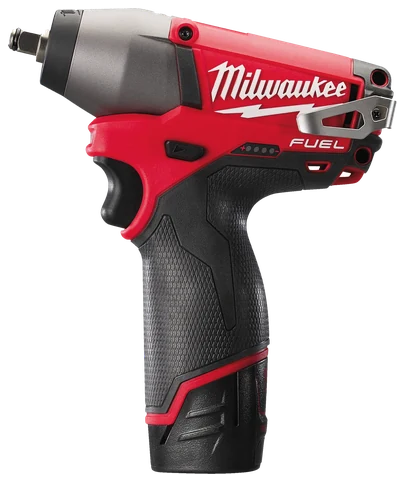
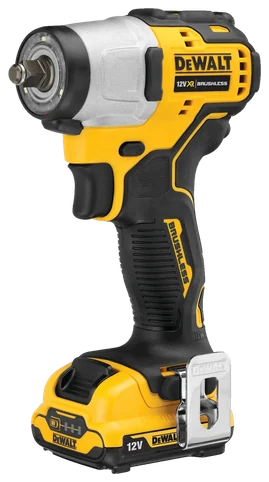
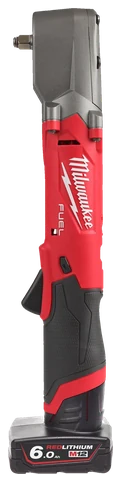
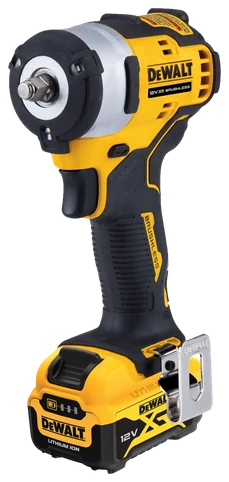
1/2in
24 tools
 M18 ONEFIW2FC12Milwaukee* adjustable 67 to 203 Nm203Nm
 GDS 250-LIBosch250Nm
 M12 FRAIWF12Milwaukee270Nm
 SSW 18 LT 300 BLMetabo300Nm
 SSW 18 LTX 300 BLMetabo300Nm
 M18 ONEIWF12Milwaukee300Nm
 DTW300Makita330Nm
 M18 FIW2F12Milwaukee339Nm
 GDS 18V-400Bosch400Nm
 SSW 18 LTX 400 BLMetabo400Nm
 DCF922DeWalt406Nm
 GDS 18V-450 PCBosch450Nm
 DTW701Makita700Nm
 M18 FMTIW2F12Milwaukee745Nm
 TW008GMakita760Nm
 GDS 18V-780Bosch780Nm
 SSW 18 LTX 800 BLMetabo800Nm
 DCF892DeWalt812Nm
 DCF899DeWalt950Nm
 GDS 18V-1000Bosch1,000Nm
 M18 ONEFHIWF12EMilwaukee1,017Nm
 M18 FHIWF12Milwaukee1,356Nm
 DCF900DeWalt1,396Nm
 SSW 18 LTX 1450 BLMetabo1,450Nm
 DCF961DeWalt1,626Nm
3/4in
7 tools
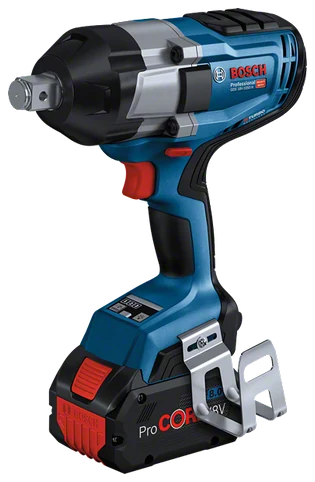
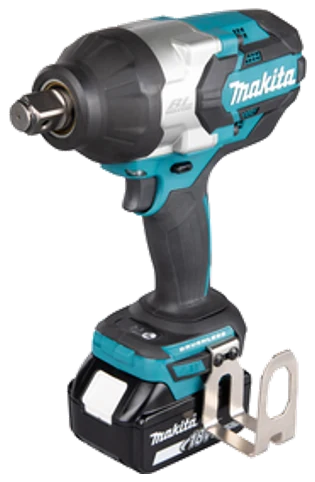
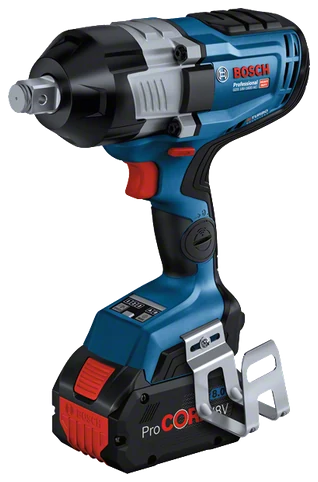
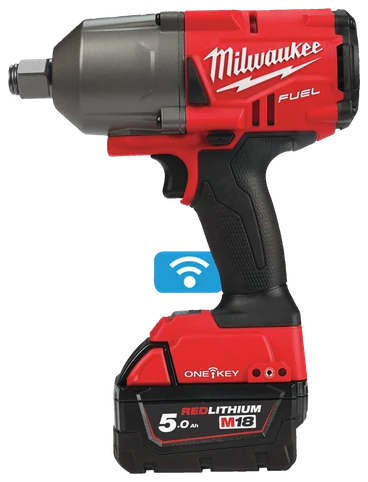
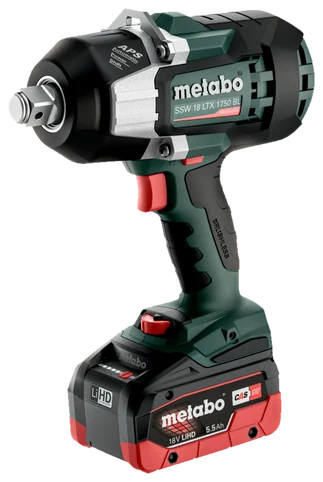
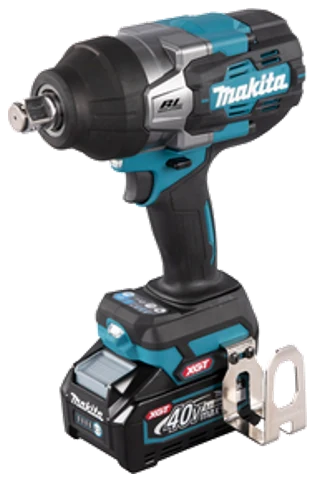
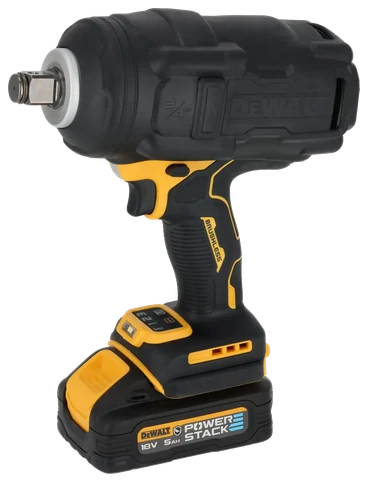
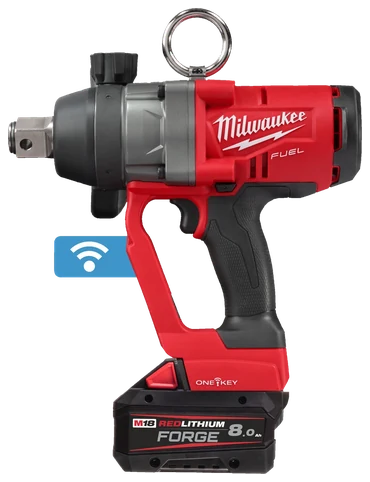
1in
5 tools
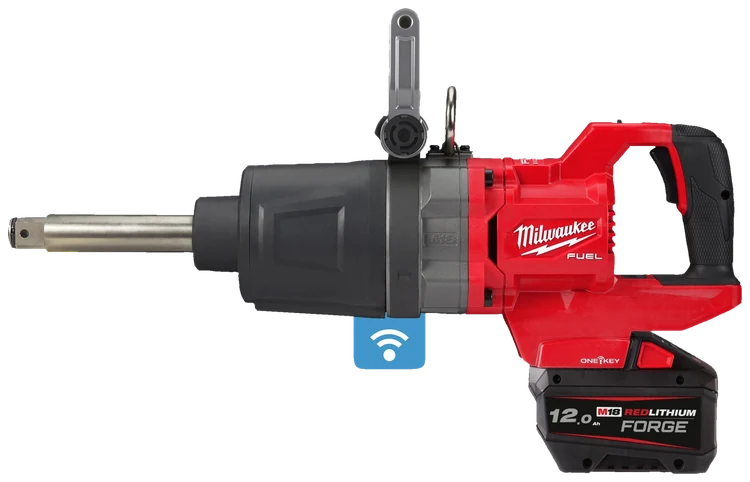
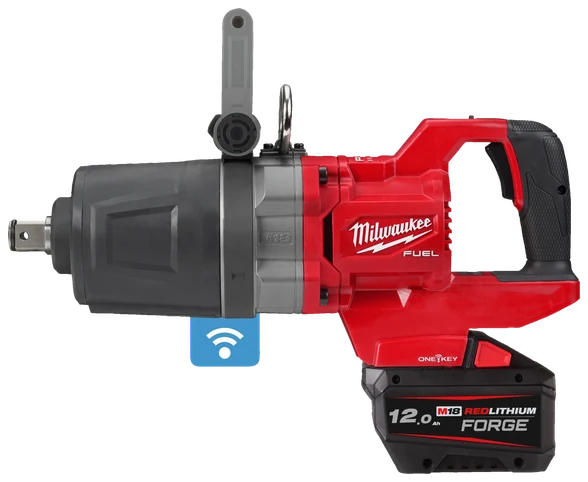
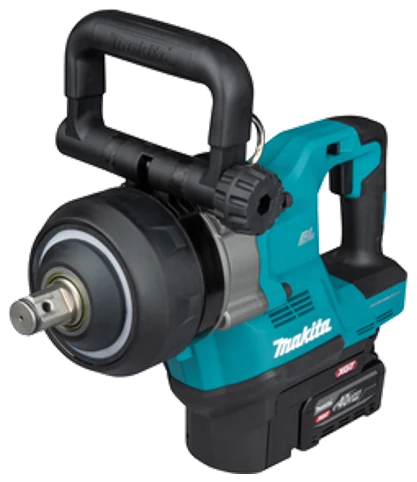
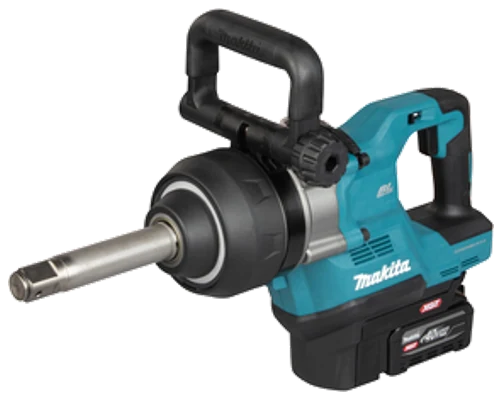
Full table
Approximate tightening torque in newton metres (Nm), rounded for display.
| Bolt / nut (mm) | Class 8.8 | Class 10.9 | Class 12.9 | |||
|---|---|---|---|---|---|---|
| Dry | Lightly oiled | Dry | Lightly oiled | Dry | Lightly oiled | |
| M8 / 13 mm | 25 | 19 | 36 | 27 | 43 | 32 |
| M10 / 16 mm | 50 | 38 | 70 | 55 | 85 | 65 |
| M12 / 18 mm | 90 | 65 | 125 | 95 | 145 | 110 |
| M14 / 21 mm | 140 | 105 | 200 | 150 | 230 | 175 |
| M16 / 24 mm | 220 | 165 | 310 | 230 | 370 | 270 |
| M18 / 27 mm | 310 | 230 | 430 | 320 | 500 | 380 |
| M20 / 30 mm | 440 | 330 | 610 | 460 | 710 | 530 |
| M22 / 34 mm | 600 | 450 | 830 | 620 | 970 | 730 |
| M24 / 36 mm | 760 | 570 | 1050 | 790 | 1250 | 920 |
| M27 / 41 mm | 1100 | 840 | 1550 | 1150 | 1800 | 1350 |
| M30 / 46 mm | 1500 | 1150 | 2100 | 1550 | 2450 | 1850 |
| M33 / 50 mm | 2050 | 1550 | 2850 | 2150 | 3350 | 2500 |
| M36 / 55 mm | 2650 | 2000 | 3650 | 2750 | 4300 | 3200 |
Frequently asked questions
Why is an impact wrench not a torque wrench?
An impact wrench tightens with repeated blows, so the tightening torque that reaches the bolt changes with friction, the type of joint and how long it impacts. Bossard puts the scatter of impact tightening at ±43% to ±60% and calls it suitable for preliminary tightening only. For a joint with a specified torque, use a torque wrench or the method the project specifies.
What is the difference between dry and lightly oiled?
Oil lowers friction in the thread, so the same tightening torque gives more tension in the bolt. A lightly oiled bolt therefore needs about 25% less tightening torque than a dry one (K = 0.15 against 0.20). Tightening an oiled bolt to the dry figure can over-tighten it and break it.
Why do other tables give higher numbers?
VDI and Norbar tables load the bolt to 90% of its yield strength, while we calculate at 75% of the proof load, as the Fastenal table does. Their tables therefore give up to 25% higher numbers for oiled bolts, and the gap for dry bolts is smaller (within about 10%).
What is the difference between tightening torque and nut-busting torque?
Tightening torque is what the tool applies when it tightens a bolt. Nut-busting torque is a separate, usually higher figure for freeing stuck nuts. This page compares only the published tightening torque, because that is the one that matters for tightening a bolt.
Method: the bolt preload (F) is 75% of the proof load (ISO 898-1), and the tightening torque (T) comes from the friction factor K, the diameter (d) and the preload, with K at 0.20 for dry and 0.15 for lightly oiled:
T = K × d × F
Sources: ISO 898-1 (TR Fastenings), Fastenal, Bossard, Norbar, NASA GSFC, ISO 4032 (Wermac)