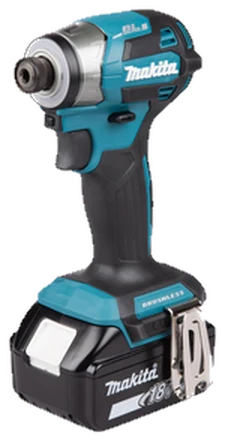
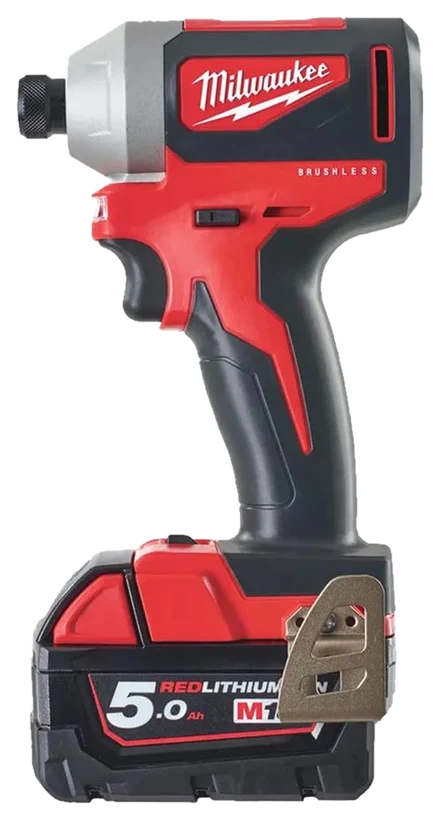
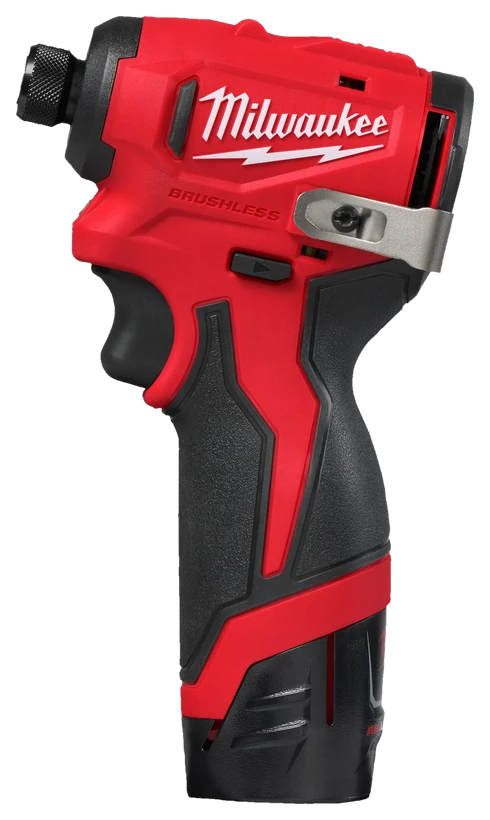
The impact driver tightens and loosens screws and nuts with fast rotational impacts, which is what sets it apart from a plain drill: instead of turning steadily, it delivers small blows one after another, so it finishes long and stubborn screws without tiring your wrist or letting the bit slip out. Bits fit in a 1/4 inch hex holder. The impact wrench (square drive) is a different category, for large nuts, with its own page on the site.
Power
Max Tightening Torque
The highest tightening torque the maker publishes for the tool when it drives a screw or a nut.
How it helps you: This figure decides how big a screw or nut the tool can finish. For 6x100 wood screws, drywall screws and light fitting, 120 to 180 Nm is enough and gives you a lighter tool. For long screws in hardwood, lag screws and structural fixings, look for 200 Nm and up.
180Nm
Ranked 11 of 17 (tied)
Max Nut-busting Torque
The force the tool can use to loosen a seized nut or screw (nut-busting torque).
How it helps you: It helps when you loosen rusted screws or nuts that were tightened long ago. Freeing a seized nut takes far more force than tightening it. Only some makers publish this figure, so it carries no points: we do not penalise a tool because its maker did not publish the number, and we do not compare a published number with a missing one.
Not published
Speed and impacts
No-load Speed (High)
Revolutions per minute in the high setting with no load.
How it helps you: Higher speed finishes short and medium screws faster, which saves time when you have hundreds to drive: drywall boards, timber, suspended ceilings. For long screws you drop to a slower setting so you can control the tightening.
3,600rpm
Ranked 5 of 17 (tied)
No-load Speed (Low)
Speed in the slowest setting, meant for starting a screw gently and for precise work.
How it helps you: A slower speed gives you more control starting a screw, so you do not strip the head or split the wood. There is no universally better number, so it does not count toward the score.
1,100rpm
Impact Rate (bpm)
How many rotational impacts the tool delivers per minute (bpm). Makers that write ipm (impacts per minute) mean the same figure, and we normalise the unit to bpm.
How it helps you: More impacts per minute mean faster, smoother driving on long screws.
3,800bpm
Ranked 10 of 17 (tied)
Speed/Power Modes
How many modes you can set for the tool's speed and power (each maker names them differently: levels, steps, modes).
How it helps you: More modes let you match the power to each job: a gentle mode for small screws and soft materials, a strong mode for long screws. It protects screw heads and saves battery.
4
Ranked 2 of 13 (tied)
Handling
Weight (Bare Tool)
The tool's weight without a battery, as the maker publishes it.
How it helps you: A lighter tool is easier on your arm for overhead work, ceilings, scaffolding and long days. We compare without the battery, because the weight with it depends on which pack you fit.
0.85kg
Ranked 2 of 15 (tied)
Head Length
The length of the tool from the back of the head to the bit holder.
How it helps you: A shorter tool fits tight spots: between studs, inside cabinets and between joists. The shorter it is, the easier it is to work at an awkward angle.
111mm
Ranked 2 of 14
Bit Holder
The type of socket the bit fits in. Most tools use a 1/4 inch (6.35 mm) hex.
How it helps you: A 1/4 inch hex takes all common driver bits and swaps in a second. For information only, no points.
1/4" hex (6.35 mm)
Motor and light
Brushless Motor
A motor without carbon brushes, controlled electronically.
How it helps you: It is more efficient, runs cooler and needs no brush changes. That means longer battery runtime and a longer-lived tool, especially in continuous work.
Yes
Work Light (LED)
An LED fitted at the front of the tool that lights the work area.
How it helps you: You can see the screw head in dark places: under cabinets, inside ceilings, in basements. It saves you from holding a torch in your other hand.
Yes
Warranty
Tool warranty
Coverage for the tool itself. Terms differ by each brand's agent in Jordan.
Check with the local agent
Battery warranty
Coverage for the battery. Terms differ by each brand's agent in Jordan.
2 years · check with the local agent
We do not publish warranty periods because they differ by agent in Jordan. Ask the agent about the warranty before you buy.
Frequently asked questions
What is the maximum tightening torque of the Makita DTD173?
The maker publishes a maximum tightening torque of 180 Nm for the Makita DTD173. The measurement type is not published in our data.
What are the voltage, bare weight and length of the Makita DTD173?
The Makita DTD173 runs on 18V on the LXT platform, with an official bare weight of 0.85 kg and a length of 111 mm.
Compare with
Tools in the same category from other brands. Pick one and enter the ring.
Sources: Max Tightening Torque: www.makita.pl, and the official operating manuals. Last checked 2026-10-07. Tool image: Makita. Tools Battlefield is independent and not affiliated with any brand.
Independent: no prices, no ads, numbers from official manufacturer sites. How we compare